Despite advances in automation, human factors remain a leading cause of industrial accidents and near misses across US manufacturing and processing facilities. Complex control panels, unclear operating modes, and limited feedback can all increase the likelihood of mistakes.
When operators must navigate multiple pushbuttons or ambiguous controls, the risk of selecting the wrong function rises. Traditional single-function pushbuttons can be effective for simple tasks, but on sophisticated equipment, they can easily contribute to confusion. In contrast, clearly defined rotary switches and selector switches provide more structured mode control.
The business impact of operator error is significant: workplace injuries, costly downtime, damaged equipment, and potential regulatory exposure under OSHA investigations. Research consistently shows that violations, lapses in attention, and human error are major contributors to machinery-related incidents. This makes control-system clarity a critical part of any safety strategy.
How multi-position selector switches improve safety by design
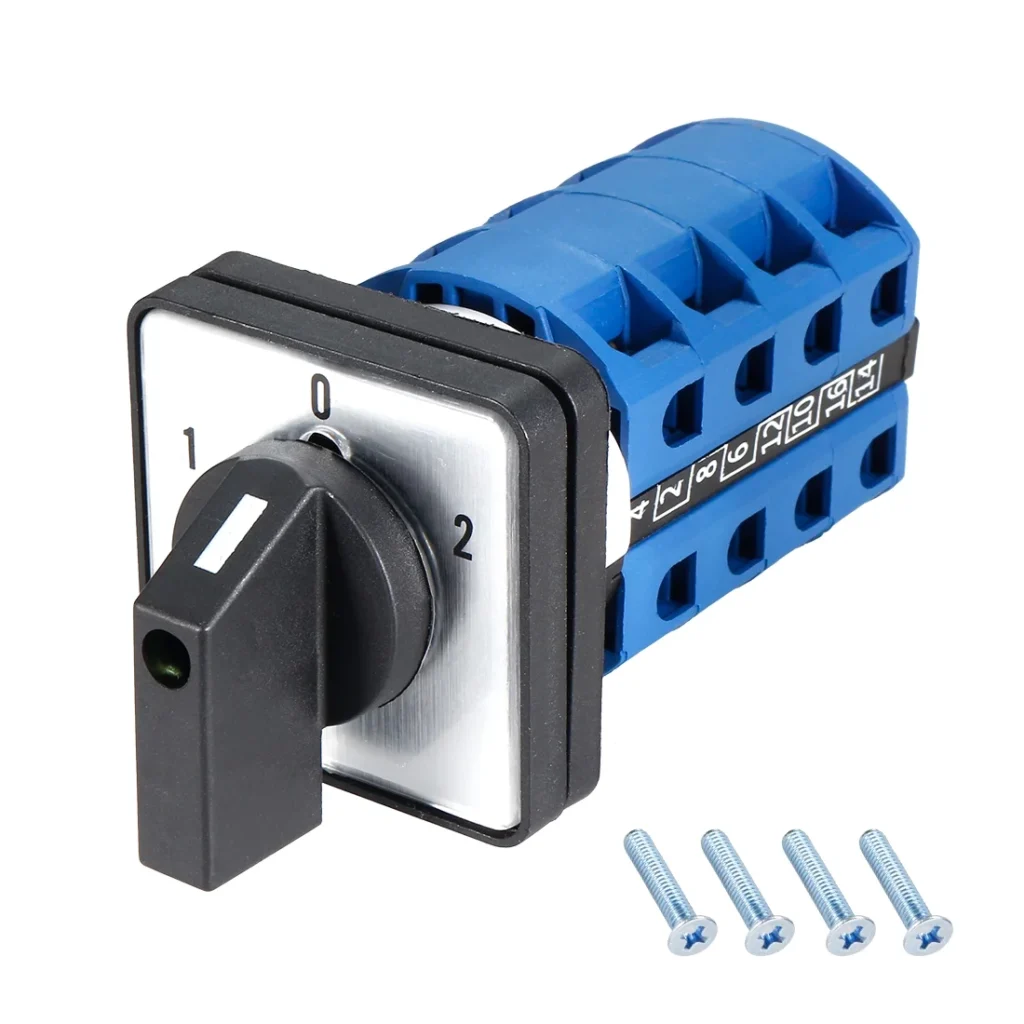
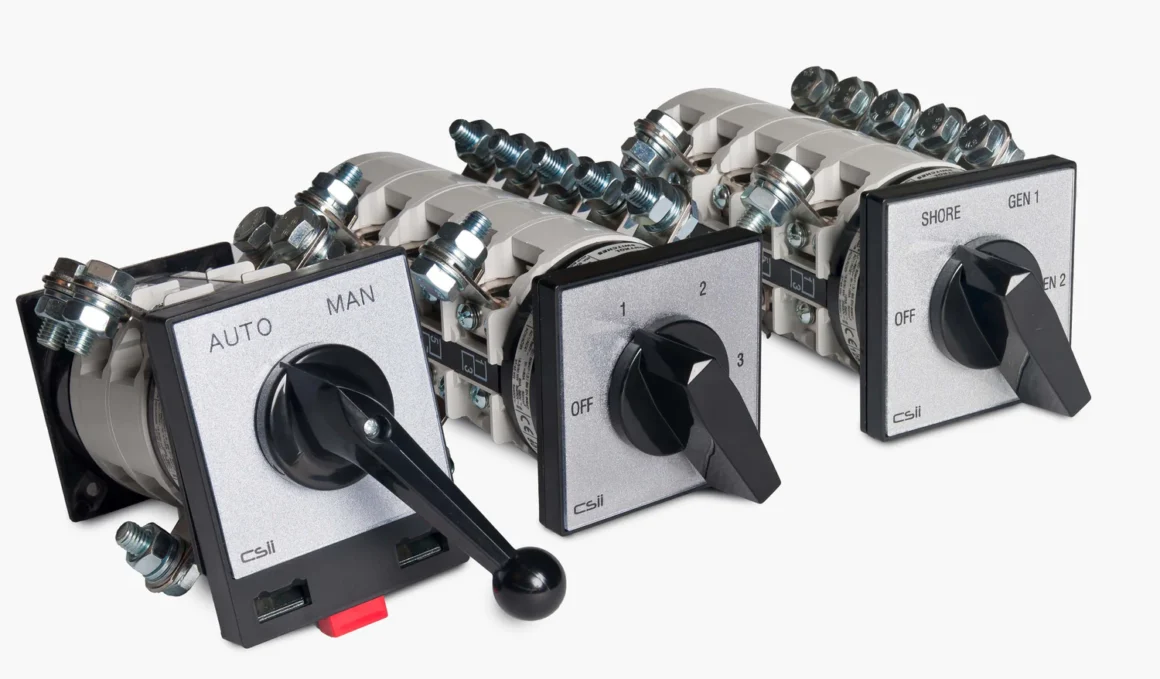
Multi-position selector switches are designed to make operating modes explicit. Common configurations include two- or three-position switches, available in maintained (stays in position) or momentary (returns to default) versions. Each position corresponds to a clearly defined mode, for example, “Off,” “Manual,” or “Automatic.”
By physically separating these modes, selector switches reduce ambiguity during setup, cleaning, or normal production. Mechanical detents provide tactile confirmation, while illumination offers visual feedback about active status. For greater security, key-operated selector switches restrict access so that only authorized personnel can change modes.
Understanding the correct type and configuration of selector switches is essential for safe application in industrial environments. Clear labeling and robust construction further support predictable operator behavior, reducing the chance of inadvertently starting the wrong function on complex machinery.
Aligning mode selection with safety standards and regulations
Effective operating-mode selection also supports compliance with machine safety expectations. Good practice dictates that each selector switch position should enable only one operating mode, and that switching modes alone should not automatically start the machine.
While US companies primarily reference OSHA and ANSI standards, European guidance often emphasizes structured mode selection and risk-reduction strategies that can be adopted globally. Selector switches play a key role in machine building by clearly distinguishing operating states and reducing the potential for unsafe transitions.
Practical implementation lessons from recent european practice
Recent discussions in the UK and Europe highlight the growing use of three-position enabling switches in robotics teaching and maintenance applications. These devices require continuous, deliberate action from the operator, adding an extra layer of protection during high-risk tasks.
US manufacturers integrating global machinery can benefit from these design approaches. Key-type selector switches can prevent unauthorized mode changes, while clearly defined multi-position controls minimize human error on advanced automation systems. By prioritizing thoughtful mode-selection design, businesses not only improve compliance, but create safer, more intuitive workplaces.