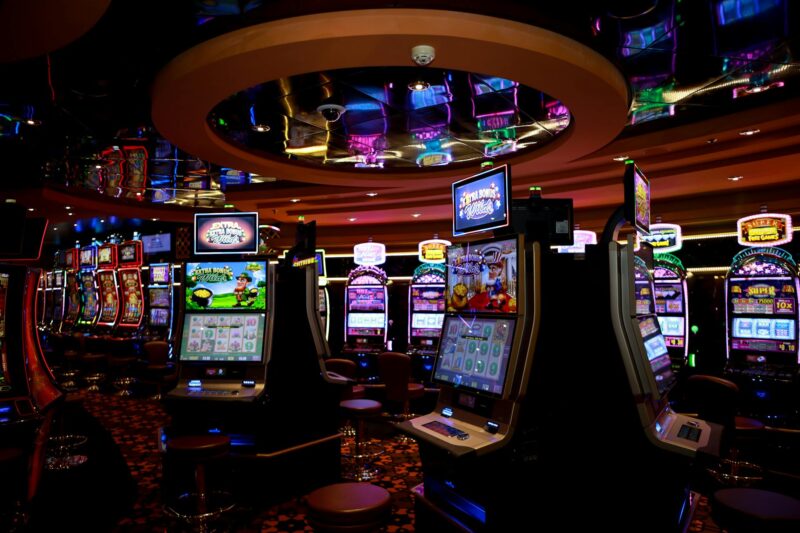
Online gambling was nowhere near the success of the land-based casino sector for many years. It all started as a bunch of sites with red banners promising “real-world casino experience” but offered basic games with lots of technical issues each time you wanted to play them from a different browser or different PC.
If you tried online casinos in the early 2000s, then you probably remember how bad they were. Literally almost any online casino needed an Adobe Flash Player to be installed to make the website work. But now in 2026 the industry is just huge. Now, it’s not just ugly sites published here and there over the Internet. It’s a complex ecosystem serving millions of players on a daily basis.
Players often focus on what kind of bonuses a casino has or what payment methods are supported, while the real heart of every casino is its hardware. It’s obvious that we are only there to have fun and don’t think of how all infrastructure is maintained, but such questions may be interesting for those who are in the process of launching their own casino brand and want to know what’s behind the facade. Without the industry’s best servers, crypto gambling would not function as we know it now and would be just a niche thing for crypto geeks.
How Blockchain Made Online Gambling Different
Traditional online casinos are hosted on centralized servers that belong to some hosters like GoDaddy in the US or Hetzner in Europe. Everything, starting from RNG, payment processing and account balances, are located on one single server with lots of RAM and CPU power. Sometimes it’s even a server rack with 5-10 servers serving different locales or countries. Blockchain casinos work in a bit different manner, relying on distributed ledgers to process payments and even game outcomes. As for transactions, they can be written to a public or semi-public blockchain while smart contracts automate payouts.
When casinos started using blockchain, the entire stack of technologies changed so as the need for developers. Instead of massive databases, operators now need reliable access to blockchain networks, which provokes the demand for blockchain developers with experience in the FinTech and Payment industries. Latency, confirmation time, and node availability now matter way more than the unique front-end fancy design that almost every online casino already has. Every deposit or withdrawal becomes an event that must be validated by validator nodes somewhere in the world.
The key difference between the old-fashioned online casinos and blockchain-based online casinos is trust. In centralized casinos, trust is proven mainly because of the regulations and licenses a casino has to comply with. But when it comes to decentralized models, trust is proven by blockchain and validators. That is why understanding hardware is a basis for understanding the rest of crypto gambling industry that works behind the curtains.

The Hardware
At the heart of any blockchain casino lies a combination of computing systems and blockchain each responsible for different tasks. Some belong to the casino operator and used for inner staff like accounts and balances, others belong to the blockchain network itself and used for deposits and withdrawals.
First come the validator and mining nodes. These nodes or big computers for your better understanding, confirm transactions and add blocks to the chain. Depending on the blockchain used, this can involve energy that is gathered with GPUs or ASIC miners while mining. Ethereum blockchain relies on the PoS protocol when interested parties launch validator nodes with stable CPUs and constant uptime.
Second are casino backend servers that are used for all the rest starting from hosting all the necessary code and design elements to making it possible for gamers to have support for live chats and everything. But they can’t work on the blockchain itself and still require application servers to manage user interfaces, connect wallets, and interact with smart contracts. These systems typically run on enterprise-grade servers or even cloud solutions from Amazon.
The Future of Crypto Gambling Hardware
With the growing number of players visiting online casinos, there will be a growing demand for hardware. We already see how AI is provoking the new price limits for RAM and GPU. Many experts say that SSDs will catch up with the price spikes, making it even more expensive to run a casino infrastructure. So the main challenge of the future is to make the casino backend resilient to traffic spikes and lower the gas and transaction fees for customers.
Transactional costs are extremely relevant in jurisdictions where people tend to top up their accounts with small amounts of funds to avoid overspending or due to strict money management. That’s where you need a different solution other than Ethereum, Bitcoin or Tron because these three can have high transaction fees of $10 or more per transaction. Imagine the case when someone wants to add $20 to their account and has to pay 50% for transaction fees. That’s a pain for small transactions and the key reason why casinos like 777bet fun tend to implement Solana and Immutable X for faster and cheaper transactions.
Why Hardware Knowledge Matters for Players
As a player, you will never see the tech background that makes all the magic, but having an understanding of how everything works will let you choose a better casino where you will not be ripped off by faulty or compromised RNG, and rely on a pure game of chance when playing in a casino that is based on blockchain that cannot be compromised.
Being tech-savvy helps you make better decisions. Faster withdrawals on blockchain, provably fair games, and long-term platform stability all stem from the hardware they use. As the blockchain casino industry grows, the winners will not only be those with the best games, but also those with the strongest technological stack, resilient to hacks and failures.